
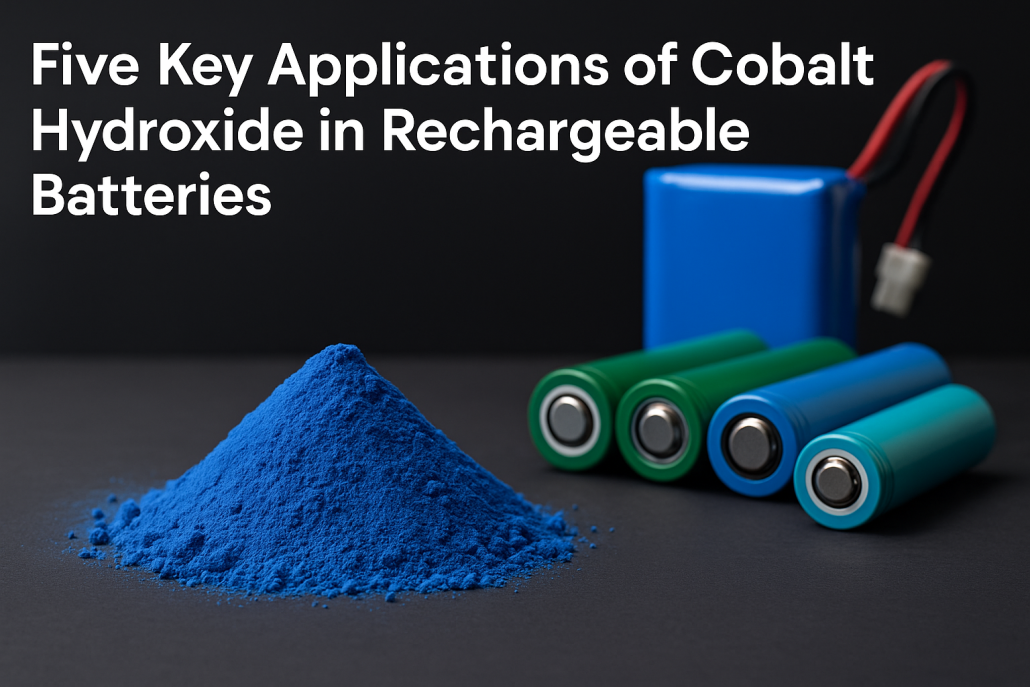
۵ کاربرد مهم هیدروکسید کبالت در باتریهای قابل شارژ
شیمیایی شیمیو عرضهکننده مستقیم هیدروکسید کبالت در ایران
🔹 چکیده
هیدروکسید کبالت (Co(OH)₂) یکی از ترکیبات کلیدی در فناوری ساخت باتریهای قابل شارژ است که بهدلیل ساختار نیمهرسانا، ظرفیت ذخیره بار بالا، و قابلیت تبدیلپذیری به اکسید کبالت، در طراحی و بهبود عملکرد باتریهای لیتیوم-یون، یونسدیوم، و ابرخازنها نقش حیاتی دارد. در این مقاله، ۵ کاربرد اصلی این ماده در باتریها بررسی شده و نقش آن در بهبود راندمان، چرخه عمر و ایمنی باتریها تحلیل میشود.
۱. ماده پیشساز برای ساخت کاتد اکسید کبالت (Co₃O₄ و LiCoO₂)
هیدروکسید کبالت یکی از مهمترین پیشمادهها برای سنتز اکسید کبالت است که در باتریهای لیتیوم-یون بهعنوان کاتد استفاده میشود.
| ویژگی | تأثیر |
|---|---|
| خلوص بالا و واکنشپذیری عالی | کنترل بهتر ساختار بلوری Co₃O₄ |
| قابلیت تنظیم ذرات نانویی | افزایش سطح فعال و چگالی انرژی |

Co(OH)₂ → Co₃O₄ (با حرارتدهی) → LiCoO₂ (در فرآیند لیتیاسیون)
۲. مشارکت مستقیم ساختار الکترود مثبت در باتریهای فلز-هوا و یونسدیم
در برخی باتریها، Co(OH)₂ مستقیماً بهعنوان ماده فعال در کاتد استفاده میشود.
-
در باتریهای سدیم-یون (Na-ion): بهعنوان الکترود پشتیبان برای افزایش پایداری در چرخههای شارژ-دشارژ
-
در باتریهای فلز–هوا (مانند Zn–Air): برای تقویت واکنش احیای اکسیژن (ORR) در الکترود کاتدی
Co(OH)₂ موجب افزایش بازده و کاهش مقاومت داخلی در سیستمهای باتری نسل جدید میشود.
۳. سنتز نانوکامپوزیتهای هیبریدی برای افزایش ظرفیت ذخیره انرژی
ترکیب هیدروکسید کبالت با گرافن، کربن فعال یا نانوذرات فلزی، باعث تولید نانوکامپوزیتهایی با خواص فوقالعاده میشود.
| نانوکامپوزیت | عملکرد |
|---|---|
| Co(OH)₂–Graphene | رسانایی بالا، ظرفیت بیشتر، شارژ سریعتر |
| Co(OH)₂–Carbon Nanotube | کاهش مقاومت داخلی، بهبود عملکرد چرخهای |
| Co(OH)₂–Polyaniline | انعطافپذیری مکانیکی و پایداری بیشتر |
۴. بهکارگیری در ابرخازنهای هیبریدی (Hybrid Supercapacitors)
ابرخازنها (Supercapacitors) که با عنوان خازنهای دو لایه الکتریکی (EDLC) یا خازنهای شبهباتری نیز شناخته میشوند، بهدلیل قدرت شارژ و دشارژ بسیار سریع، توجه ویژهای در حوزه ذخیره انرژی یافتهاند. با این حال، یکی از چالشهای اصلی آنها، ظرفیت ذخیره انرژی نسبتاً پایین در مقایسه با باتریهای لیتیوم-یون است. برای حل این مشکل، ابرخازنهای هیبریدی طراحی شدهاند که هیدروکسید کبالت در آنها نقشی کلیدی ایفا میکند.
🧪 ۴.۱. چرا Co(OH)₂ برای ابرخازن مناسب است؟
هیدروکسید کبالت دارای ساختار لایهای با ظرفیت ویژه الکتروشیمیایی بالاست و میتواند بهطور مؤثری در واکنشهای شبهباتری شرکت کند. این ترکیب دارای واکنشپذیری سطحی بالا و قابلیت انتقال الکترون سریع است که در ساخت الکترودهای مثبت استفاده میشود.
| ویژگی Co(OH)₂ | مزیت عملکردی |
|---|---|
| ساختار کریستالی لایهای | مسیر انتقال یون کوتاه و سریع |
| ظرفیت ویژه بالا (500–800 F/g) | ذخیره انرژی بیشتر در واحد جرم |
| پایداری در محیط قلیایی | افزایش عمر چرخهای ابرخازن |
⚙️ ۴.۲. ترکیب با مواد رسانای کربنی
Co(OH)₂ بهتنهایی مقاومت داخلی نسبتاً بالایی دارد. برای افزایش رسانایی و عملکرد چرخهای، اغلب با موادی مانند graphene oxide، کربن فعال، یا کربن نانولولهای (CNT) ترکیب میشود.
| نانوکامپوزیت ترکیبی | عملکرد |
|---|---|
| Co(OH)₂/Graphene | افزایش سطح فعال، کاهش مقاومت الکترونی |
| Co(OH)₂/CNT | بهبود رسانایی و ظرفیت چرخهای |
| Co(OH)₂/PANI (پلیآنیلین) | افزایش انعطافپذیری و پایداری شیمیایی |
🔋 ۴.۳. عملکرد واقعی در دستگاههای ذخیره انرژی
در نمونههای آزمایشگاهی، الکترودهای ساختهشده از هیدروکسید کبالت:
-
چگالی انرژی در حدود ۳۰–۴۰ Wh/kg ارائه میدهند
-
تا ۱۰۰۰–۳۰۰۰ چرخه شارژ/دشارژ بدون افت محسوس عملکرد دوام دارند
-
قابلیت شارژ در کمتر از ۱–۵ دقیقه را فراهم میکنند
📈 ۴.۴. مزایا نسبت به مواد مشابه (مقایسهای)
| ماده فعال | ظرفیت خاص (F/g) | پایداری چرخهای | هزینه نسبی |
|---|---|---|---|
| Co(OH)₂ | 500–800 | بالا | متوسط |
| MnO₂ | 200–300 | متوسط | پایین |
| Ni(OH)₂ | 300–500 | بالا | پایین |
| Graphene | 100–250 | بسیار بالا | بالا |
در ابرخازنهای هیبریدی، ترکیب Co(OH)₂ با MnO₂ یا Ni(OH)₂ میتواند ویژگیهای هر دو را ترکیب کرده و راندمان بالاتری به همراه داشته باشد.
🔄 ۴.۵. سازگاری با سیستمهای انرژی نوین
-
ابرخازنهای مجهز به Co(OH)₂ در خودروهای هیبریدی، تجهیزات ذخیره انرژی خورشیدی و سیستمهای UPS صنعتی استفاده میشوند.
-
این ترکیب پتانسیل بالایی برای استفاده در ابرخازنهای انعطافپذیر و قابل حمل دارد، که در آینده پوشیدنیها و دستگاههای پزشکی جایگاه مهمی خواهند داشت.
۵. عملکرد بهعنوان کاتالیزور الکتروشیمیایی در واکنشهای OER و HER
در فناوریهای ذخیره انرژی نوین مانند باتریهای فلز–هوا (Metal–Air)، الکترولیز آب برای تولید هیدروژن، و سلولهای سوختی قلیایی، کاتالیزورها نقش اساسی در کاهش انرژی فعالسازی و افزایش راندمان تبدیل انرژی دارند. هیدروکسید کبالت (Co(OH)₂) بهعنوان یکی از بهترین کاتالیزورهای غیرپلاتینی در این زمینه شناخته میشود.
⚡️ ۵.۱. واکنش تکامل اکسیژن (Oxygen Evolution Reaction – OER)
در فرآیندهایی مانند شارژ باتریهای فلز–هوا یا الکترولیز آب، OER یکی از کندترین مراحل است که نیاز به کاتالیزور قوی دارد.
Co(OH)₂ در محیط قلیایی بهراحتی به CoOOH و سپس CoO₂ تبدیل میشود که مراحل میانی فعال برای تسریع واکنش OER هستند:
| ویژگی | مزیت |
|---|---|
| سطح فعال بالا | فراهمسازی محلهای واکنش بیشتر |
| ساختار لایهای | انتقال سریع یون OH⁻ |
| پتانسیل پایین برای آغاز OER | راندمان انرژی بیشتر |
کاربرد در الکترولایزرهای صنعتی و سیستمهای تولید هیدروژن سبز بسیار گسترده است.
💧 ۵.۲. واکنش تکامل هیدروژن (Hydrogen Evolution Reaction – HER)
در مرحله دوم الکترولیز آب، تولید هیدروژن رخ میدهد. Co(OH)₂ با مهندسی سطحی (dopant یا ترکیب با کربن)، میتواند بهعنوان کاتالیزور HER نیز عمل کند.
| بهینهسازی | نتیجه |
|---|---|
| ترکیب Co(OH)₂ با گرافن یا CNT | کاهش مقاومت داخلی، تسهیل انتقال الکترون |
| آلایش با نیکل یا آهن (Ni, Fe-doped) | کاهش انرژی فعالسازی، افزایش پایداری |
| کنترل ساختار نانویی | افزایش تعداد مراکز فعال و بهبود جذب پروتون |
🔄 ۵.۳. کاربرد در باتریهای قابل شارژ Zn–Air و Li–O₂
در این باتریها، بهویژه در مرحله شارژ، واکنشهای OER اهمیت زیادی دارند. کاتد حاوی Co(OH)₂ باعث میشود:
-
شارژ راحتتر و سریعتر انجام شود
-
عمر چرخهای باتری افزایش یابد
-
پایداری ساختاری کاتد در طول واکنشها حفظ شود
🧪 ۵.۴. مزایای Co(OH)₂ نسبت به کاتالیزورهای فلزات گرانبها
| پارامتر | Co(OH)₂ | Pt, Ru, Ir |
|---|---|---|
| قیمت | بسیار پایینتر | بسیار بالا |
| دسترسی | فراوانتر | محدود |
| پایداری در محیط قلیایی | بالا | متوسط |
| بازده در چرخههای بلندمدت | بالا | افت تدریجی |
به همین دلیل، Co(OH)₂ بهعنوان کاندید جایگزین اقتصادی برای Pt و IrO₂ در تحقیقات و توسعه صنعتی مطرح است.
📌 ۵.۵. نتیجهگیری بخش
هیدروکسید کبالت بهعنوان یک کاتالیزور الکتروشیمیایی قدرتمند در واکنشهای OER و HER، نقش مهمی در توسعه فناوریهای نوین ذخیره انرژی دارد. قابلیت ترکیب با سایر مواد، هزینه پایین، و عملکرد بالا، این ترکیب را به گزینهای استراتژیک در اقتصاد هیدروژنی و باتریهای نسل آینده تبدیل کرده است.
جمعبندی مزایای استفاده از Co(OH)₂ در باتریها
| مزیت کلیدی | توضیح |
|---|---|
| قابلیت تبدیل به اکسیدها و کامپوزیتهای فعال | افزایش راندمان باتری |
| ساختار نانویی و سطح فعال بالا | بهبود ظرفیت و سرعت شارژ |
| واکنشپذیری بالا با لیتیوم، سدیم و اکسیژن | مناسب برای نسلهای جدید باتری |
| پایداری شیمیایی مناسب | افزایش طول عمر باتری |
منابع:
-
Recent Advances in Cobalt-Based Electrode Materials for Supercapacitors
🔗 https://www.sciencedirect.com/science/article/abs/pii/S0013468619339424
مرجع علمی معتبر درباره نقش Co(OH)₂ و مشتقات آن در ابرخازنها
-
Cobalt Hydroxide Nanosheets as Efficient Electrocatalysts for Oxygen Evolution Reaction
🔗 https://pubs.acs.org/doi/10.1021/acsami.5b07534
تحقیقات درباره عملکرد Co(OH)₂ در واکنش OER
-
Cobalt-based Materials for Rechargeable Batteries
🔗 https://onlinelibrary.wiley.com/doi/full/10.1002/aenm.201803288
بررسی جامع کاربرد ترکیبات کبالت در باتریهای لیتیومی و سدیمی
-
Cobalt Hydroxide/Carbon Nanotube Nanocomposite Electrodes for High-Performance Hybrid Supercapacitors
🔗 https://www.nature.com/articles/srep08788
مثالی از کامپوزیتهای کربنی حاوی Co(OH)₂ در تجهیزات ذخیره انرژی
-
Electrochemical Properties of Cobalt Hydroxide Thin Films
🔗 https://www.sciencedirect.com/science/article/abs/pii/S0378775304001774
مطالعه عملکرد لایههای نازک Co(OH)₂ در کاربردهای الکتروشیمیایی
5 Key Applications of Cobalt Hydroxide in Rechargeable Batteries
Shimiu Chemical – Direct supplier of cobalt hydroxide in Iran
🔹 Abstract
Cobalt hydroxide (Co(OH)₂) is a key compound in the development of rechargeable battery technologies due to its semiconductive structure, high charge storage capacity, and ability to convert into cobalt oxide. It plays a vital role in enhancing the performance, efficiency, and safety of lithium-ion, sodium-ion, and supercapacitor systems. This article explores the 5 major applications of cobalt hydroxide in modern batteries and its impact on energy storage technologies.
1. Precursor Material for Cobalt Oxide Cathodes (Co₃O₄ and LiCoO₂)
Cobalt hydroxide is a primary precursor for synthesizing cobalt oxides, particularly used in lithium-ion batteries as cathode materials.
| Property | Impact |
|---|---|
| High purity and reactivity | Better control over Co₃O₄ crystal phase |
| Tunable nano-particles | Increased surface area and energy density |
Conversion:
Co(OH)₂ → Co₃O₄ (via heating) → LiCoO₂ (via lithiation)
2. Active Material in Positive Electrodes for Metal-Air and Sodium-Ion Batteries
In certain battery systems, Co(OH)₂ is directly used as an active material in cathodes.
-
In Sodium-Ion Batteries (Na-ion): Acts as a stabilizing support for extended charge-discharge cycles.
-
In Metal-Air Batteries (e.g., Zn–Air): Enhances oxygen reduction reaction (ORR) efficiency.
Benefit: Co(OH)₂ improves overall efficiency and reduces internal resistance in next-generation batteries.
3. Synthesis of Hybrid Nanocomposites for Enhanced Energy Storage
When combined with graphene, activated carbon, or metallic nanoparticles, cobalt hydroxide forms hybrid nanocomposites with enhanced performance.
| Composite | Function |
|---|---|
| Co(OH)₂–Graphene | High conductivity, higher capacity, fast charging |
| Co(OH)₂–CNT | Lower resistance, improved cyclic stability |
| Co(OH)₂–Polyaniline | Mechanical flexibility, greater durability |
4. Use in Hybrid Supercapacitors
Supercapacitors offer rapid charge/discharge but often have low energy density. Hybrid supercapacitors integrate Co(OH)₂ to improve energy capacity while retaining high power output.
🧪 4.1. Why Co(OH)₂ Is Suitable for Supercapacitors:
Cobalt hydroxide’s layered crystalline structure and high specific capacity (500–800 F/g) make it highly responsive in battery-like redox reactions.
| Co(OH)₂ Property | Performance Advantage |
|---|---|
| Layered crystal structure | Fast ion transport pathways |
| High specific capacity | Greater energy storage per gram |
| Alkaline stability | Longer cycle life |
⚙️ 4.2. Combined with Carbon-Based Conductive Materials
To reduce its inherent resistance, Co(OH)₂ is often blended with conductive materials:
| Hybrid Composite | Benefit |
|---|---|
| Co(OH)₂/Graphene | Higher surface area, lower electron resistance |
| Co(OH)₂/CNT | Improved conductivity and cycling ability |
| Co(OH)₂/PANI (Polyaniline) | Greater flexibility and chemical stability |
🔋 4.3. Real Performance in Devices
-
Energy density: 30–40 Wh/kg
-
Cycle stability: 1,000–3,000 charge-discharge cycles
-
Rapid charge time: 1–5 minutes
📈 4.4. Comparison with Similar Materials
| Active Material | Specific Capacitance (F/g) | Cycle Stability | Relative Cost |
|---|---|---|---|
| Co(OH)₂ | 500–800 | High | Medium |
| MnO₂ | 200–300 | Medium | Low |
| Ni(OH)₂ | 300–500 | High | Low |
| Graphene | 100–250 | Very High | High |
Combining Co(OH)₂ with MnO₂ or Ni(OH)₂ can leverage their individual advantages.
4.5. Compatibility with Emerging Energy Systems
Co(OH)₂-equipped supercapacitors are used in hybrid vehicles, solar energy storage, and industrial UPS systems. They also show great potential in flexible and wearable electronics.
5. Electrocatalyst in OER and HER Reactions
Cobalt hydroxide serves as a cost-effective, non-precious metal catalyst for:
-
Oxygen Evolution Reaction (OER) in water electrolysis and metal-air battery charging
-
Hydrogen Evolution Reaction (HER) in green hydrogen production
⚡️ 5.1. OER Performance
In alkaline media:
Co(OH)₂ → CoOOH → CoO₂ + O₂
| Feature | Advantage |
|---|---|
| High surface area | More reaction sites |
| Layered structure | Fast OH⁻ ion transfer |
| Low OER onset potential | Improved energy efficiency |
Used in: Industrial electrolyzers and green hydrogen systems.
5.2. HER Performance
With surface engineering:
| Optimization | Effect |
|---|---|
| Co(OH)₂ + Graphene/CNT | Reduced internal resistance |
| Doping with Ni or Fe | Lower activation energy |
| Nanostructuring | More active sites, better proton capture |
5.3. Use in Zn–Air and Li–O₂ Batteries
-
Enhances charging efficiency
-
Increases battery lifespan
-
Maintains cathode structural integrity during cycling
5.4. Comparison with Precious Metal Catalysts
| Parameter | Co(OH)₂ | Pt, Ru, Ir |
|---|---|---|
| Cost | Much lower | Very high |
| Availability | Abundant | Limited |
| Alkaline stability | High | Moderate |
| Long-term performance | High | Degrades over time |
5.5. Section Summary
Cobalt hydroxide plays a central role in emerging energy systems by serving as an effective electrocatalyst for both OER and HER. Its low cost, tunability, and compatibility with advanced systems make it a strong candidate in the hydrogen economy and future battery designs.
Summary: Advantages of Co(OH)₂ in Batteries
| Key Benefit | Description |
|---|---|
| Converts to active oxides/composites | Improves battery efficiency |
| Nanostructure and high surface area | Enhances capacity and charging rate |
| Reactivity with Li, Na, and O₂ | Ideal for next-gen batteries |
| Good chemical stability | Extends battery lifespan |




دیدگاه خود را ثبت کنید
تمایل دارید در گفتگوها شرکت کنید؟در گفتگو ها شرکت کنید.