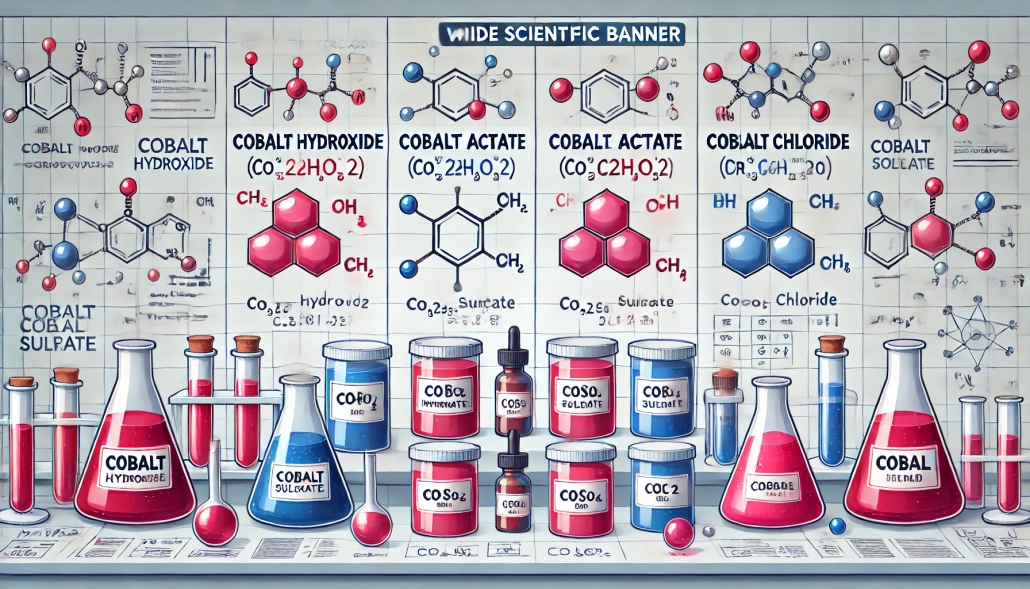
مقایسه جامع بین هیدروکسید کبالت، استات کبالت، سولفات کبالت و کلرید کبالت
فروشگاه شیمیایی شیمیو عرضه کننده هیدروکسید کبالت در مقادیر عمده و خرد میباشد.
چکیده
کبالت و ترکیبات آن نقش مهمی در صنایع مختلف از جمله تولید باتریها، کاتالیستها، رنگدانهها و فرآیندهای شیمیایی دارند. این مقاله به بررسی تفاوتهای ساختاری، فیزیکی، شیمیایی و کاربردی بین چهار ترکیب مهم کبالت شامل هیدروکسید کبالت (Co(OH)₂)، استات کبالت (Co(C₂H₃O₂)₂)، سولفات کبالت (CoSO₄) و کلرید کبالت (CoCl₂) میپردازد. همچنین، تأثیرات زیستمحیطی و ملاحظات ایمنی هر ترکیب بررسی خواهد شد.
۱. مقدمه
کبالت یکی از فلزات انتقالی مهم است که بهویژه در ترکیبات مختلف برای استفاده در صنایع انرژی، الکترونیک، شیمی و پزشکی کاربرد دارد. شناخت تفاوتهای ترکیبات کبالت برای انتخاب بهترین ماده در صنایع گوناگون ضروری است.
۲. تفاوتهای ساختاری و شیمیایی
| ترکیب | فرمول شیمیایی | حالت فیزیکی | رنگ | حلالیت در آب | pH محلول آبی | نقطه ذوب | نقطه جوش | دانسیته (g/cm³) | خاصیت شیمیایی |
|---|---|---|---|---|---|---|---|---|---|
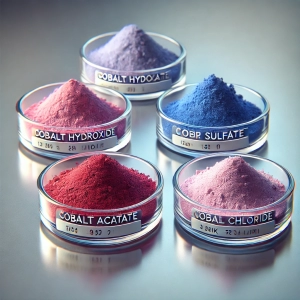
| هیدروکسید کبالت | Co(OH)₂ | پودر جامد | صورتی-قرمز | نامحلول | بازی | تجزیه میشود | تجزیه میشود | 3.6 | خاصیت قلیایی، واکنش با اسیدها |
| استات کبالت | Co(C₂H₃O₂)₂ | کریستالی | قرمز | محلول | کمی اسیدی | 140°C | تجزیه میشود | 1.7 | خاصیت کاهنده، تشکیل کمپلکسهای آلی |
| سولفات کبالت | CoSO₄ | کریستالی | صورتی | محلول | اسیدی | 735°C | تجزیه میشود | 3.7 | تمایل به تشکیل هیدراته، اکسیدکننده ضعیف |
| کلرید کبالت | CoCl₂ | کریستالی | آبی (خشک) / صورتی (آبدار) | محلول | اسیدی | 724°C | 1049°C | 3.3 | تغییر رنگ در حضور آب، خاصیت هیگروسکوپیک |
هیدروکسید کبالت در آب نامحلول است و خاصیت بازی دارد، در حالی که سایر ترکیبات حلالیت بالایی دارند و محلولهای آبی آنها خاصیت اسیدی دارند. استات کبالت تمایل به تشکیل کمپلکسهای آلی دارد، سولفات کبالت بهراحتی هیدراته میشود و کلرید کبالت یک ترکیب هیگروسکوپیک است که به تغییرات رطوبت حساس است.
۳. تفاوتهای کاربردی
۳.۱. هیدروکسید کبالت
- کاربرد در باتریهای لیتیوم-یون: به عنوان پیشماده در تولید اکسید کبالت در کاتد باتریها استفاده میشود.
- صنایع سرامیک و رنگدانهها: برای تولید رنگهای آبی و سبز در صنایع لعابسازی کاربرد دارد.
- جذبکننده آلایندهها: در فرآیندهای تصفیه آب و حذف یونهای سنگین استفاده میشود.
۳.۲. استات کبالت
- کاتالیست صنعتی: در واکنشهای شیمیایی مانند تولید پلیاتیلن ترفتالات (PET) نقش دارد.
- رنگسازی و پوششها: به عنوان ماده افزودنی در رنگها و جوهرها استفاده میشود.
- کشاورزی: در برخی از مکملهای غذایی دام و طیور به عنوان منبع کبالت استفاده میشود.
۳.۳. سولفات کبالت
- تولید باتریها: یکی از مواد اولیه مهم در تهیه الکترودهای باتریهای قابل شارژ است.
- کودهای شیمیایی: به عنوان منبع کبالت در صنایع کشاورزی برای تقویت خاک به کار میرود.
- آبکاری فلزات: در پوششدهی کبالت بر سطوح فلزی کاربرد دارد.
۳.۴. کلرید کبالت
- حسگرهای رطوبت: به دلیل تغییر رنگ از آبی (خشک) به صورتی (مرطوب) در نشانگرهای رطوبتی استفاده میشود.
- تولید رنگدانهها: در صنایع سرامیک، لعاب و شیشهسازی کاربرد دارد.
- شیمی آزمایشگاهی: به عنوان معرف در تستهای شیمیایی و تحقیقات علمی مورد استفاده قرار میگیرد.
۴. تفاوتهای زیستمحیطی و سمی
| ترکیب | سمیت برای انسان | تأثیرات زیستمحیطی | روشهای دفع |
| هیدروکسید کبالت | کمسمیت | آلودگی کم در خاک و آب | بازیافت یا تثبیت |
| استات کبالت | متوسط | میتواند منابع آبی را آلوده کند | تصفیه فاضلاب صنعتی |
| سولفات کبالت | سمی | سمیت بالا برای اکوسیستمهای آبی | روشهای جذب و خنثیسازی |
| کلرید کبالت | بسیار سمی | سمیت بالا، تجمع در زنجیره غذایی | مدیریت دقیق و دفع خاص |
کلرید کبالت و سولفات کبالت بیشترین خطرات زیستمحیطی را سمیت بالایی برای آبزیان و میکروارگانیسمها دارند. هیدروکسید کبالت، به دلیل نامحلول بودن در آب، آلودگی کمتری ایجاد میکند.
۵. نتیجهگیری
هر یک از ترکیبات کبالت دارای کاربردهای خاص و انتخاب بهترین ترکیب بستگی به نیاز صنعتی دارد:
- نیاز به ترکیب کمخطرتر برای محیطزیست باشد، هیدروکسید کبالت گزینه بهتری است.
- تولید کاتالیستها و رنگها، استات کبالت کاربردیتر است.
- صنایع باتریسازی و آبکاری، سولفات کبالت اولویت دارد.
- کلرید کبالت به دلیل قابلیت تغییر رنگ، در حسگرهای رطوبتی بیشترین استفاده را دارد.
۶. منابع
- Greenwood, N. N., & Earnshaw, A. (2012). Chemistry of the Elements. Elsevier.
- U.S. Environmental Protection Agency (EPA). (2021). Cobalt Compounds: Environmental and Health Assessments.
- World Health Organization (WHO). (2020). Cobalt Toxicity and Human Exposure.
- Journal of Industrial Chemistry. (2019). Applications and Environmental Impact of Cobalt Salts.
- Occupational Safety and Health Administration (OSHA). (2022). Safety Guidelines for Cobalt and its Derivatives.
Comprehensive Comparison of Cobalt Hydroxide, Cobalt Acetate, Cobalt Sulfate, and Cobalt Chloride
Abstract
Cobalt and its compounds play a crucial role in various industries, including battery production, catalysts, pigments, and chemical processes. This article examines the structural, physical, chemical, and functional differences between four major cobalt compounds: Cobalt Hydroxide (Co(OH)₂), Cobalt Acetate (Co(C₂H₃O₂)₂), Cobalt Sulfate (CoSO₄), and Cobalt Chloride (CoCl₂). The environmental impacts and safety considerations of each compound are also analyzed.
1. Introduction
Cobalt is a vital transition metal used in different chemical compounds across the energy, electronics, chemical, and medical industries. Understanding the distinctions between cobalt compounds is essential for selecting the most suitable material for industrial applications.
2. Structural and Chemical Differences
| Compound | Chemical Formula | Physical State | Color | Water Solubility | Aqueous pH | Melting Point | Boiling Point | Density (g/cm³) | Chemical Properties |
|---|---|---|---|---|---|---|---|---|---|
| Cobalt Hydroxide | Co(OH)₂ | Solid powder | Pink-red | Insoluble | Basic | Decomposes | Decomposes | 3.6 | Alkaline properties, reacts with acids |
| Cobalt Acetate | Co(C₂H₃O₂)₂ | Crystalline | Deep red | Soluble | Slightly acidic | 140°C | Decomposes | 1.7 | Reducing properties, forms organic complexes |
| Cobalt Sulfate | CoSO₄ | Crystalline | Pink | Soluble | Acidic | 735°C | Decomposes | 3.7 | Tends to hydrate, mild oxidizer |
| Cobalt Chloride | CoCl₂ | Crystalline | Blue (dry) / Pink (hydrated) | Soluble | Acidic | 724°C | 1049°C | 3.3 | Hygroscopic, color changes with humidity |
Cobalt hydroxide is insoluble in water and has basic properties, whereas the other compounds are highly soluble and form acidic solutions. Cobalt acetate tends to form organic complexes, cobalt sulfate easily hydrates, and cobalt chloride is highly hygroscopic, making it sensitive to humidity changes.
3. Functional Differences
3.1. Cobalt Hydroxide
- Lithium-ion Batteries: Used as a precursor in cobalt oxide production for battery cathodes.
- Ceramics and Pigments: Utilized in glazing industries for producing blue and green hues.
- Pollutant Absorption: Applied in water treatment processes to remove heavy metal ions.
3.2. Cobalt Acetate
- Industrial Catalyst: Plays a role in chemical reactions such as polyethylene terephthalate (PET) production.
- Paints and Coatings: Used as an additive in dyes and printing inks.
- Agriculture: Used in certain animal feed supplements as a cobalt source.
3.3. Cobalt Sulfate
- Battery Production: A key precursor for rechargeable battery electrodes.
- Fertilizers: Serves as a cobalt source in agricultural soil enrichment.
- Metal Plating: Used in cobalt coating applications for surface enhancement.
3.4. Cobalt Chloride
- Humidity Sensors: Utilized in moisture indicators due to its reversible color change from blue (dry) to pink (hydrated).
- Pigment Production: Applied in ceramic, enamel, and glass manufacturing.
- Chemical Research: Used as a reagent in laboratory experiments and scientific studies.
4. Environmental and Toxicological Differences
| Compound | Human Toxicity | Environmental Impact | Disposal Methods |
| Cobalt Hydroxide | Low toxicity | Minimal soil and water contamination | Recycling or stabilization |
| Cobalt Acetate | Moderate toxicity | Potential water contamination | Industrial wastewater treatment |
| Cobalt Sulfate | Toxic | Highly toxic to aquatic ecosystems | Adsorption and neutralization methods |
| Cobalt Chloride | Highly toxic | High environmental persistence, bioaccumulation risk | Specialized disposal and containment |
Cobalt chloride and cobalt sulfate pose the highest environmental hazards due to their toxicity to aquatic life and potential bioaccumulation. Cobalt hydroxide, being water-insoluble, poses the least environmental risk.
5. Conclusion
Each cobalt compound has specific applications, and the optimal choice depends on industrial needs:
- For a safer, environmentally friendly option, cobalt hydroxide is preferable.
- For catalysts and paints, cobalt acetate is most suitable.
- For battery and electroplating industries, cobalt sulfate is the preferred choice.
-
Cobalt chloride is primarily used in moisture sensors due to its color-changing properties.




دیدگاه خود را ثبت کنید
تمایل دارید در گفتگوها شرکت کنید؟در گفتگو ها شرکت کنید.