
نقش پودر آلومینیوم در تولید بتن سبک اتوکلاوشده (AAC) و مزایای آن در صنعت ساختوساز
مقدمه
در دنیای امروز، با رشد سریع جمعیت شهری و افزایش تقاضا برای ساختوساز، نیاز به مصالح ساختمانی سبک، مقاوم، مقرونبهصرفه و سازگار با محیط زیست بیش از پیش احساس میشود. یکی از مصالح نوین که در دهههای اخیر بهطور گستردهای مورد توجه مهندسان و معماران قرار گرفته، بتن سبک اتوکلاوشده یا AAC (Autoclaved Aerated Concrete) است. این نوع بتن بهواسطه ویژگیهای ممتاز خود، جایگاه ویژهای در پروژههای عمرانی پیدا کرده است. یکی از عناصر کلیدی در فرآیند تولید بتن AAC، پودر آلومینیوم است. هرچند مقدار مصرف آن اندک است، اما نقش آن در ایجاد ساختار متخلخل و سبک بتن بسیار حیاتی است. در این مقاله، به بررسی نقش پودر آلومینیوم در تولید AAC و مزایای این نوع بتن در صنعت ساختوساز میپردازیم.
بتن سبک AAC چیست؟
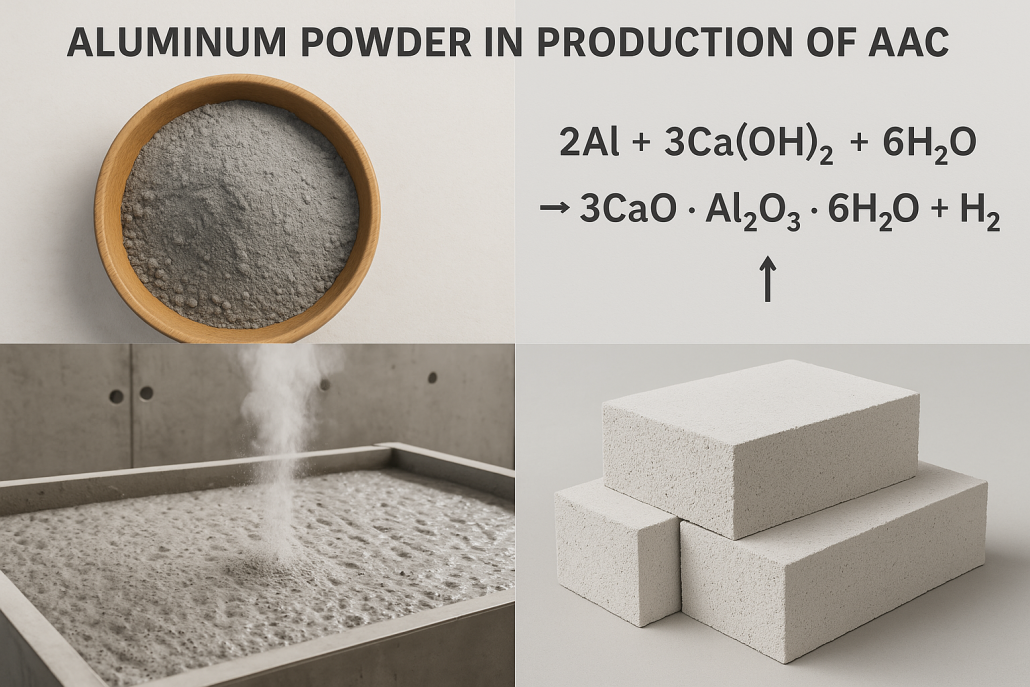
بتن سبک اتوکلاوشده (AAC)، نوعی بتن سلولی است که در دهه ۱۹۲۰ در اروپا توسعه یافت. این ماده از ترکیب سیمان پرتلند، آهک، پودر سیلیس، گچ، آب و مقدار کمی پودر آلومینیوم ساخته میشود. پس از اختلاط، این مخلوط وارد قالب میشود و در واکنش با پودر آلومینیوم، گاز هیدروژن آزاد میگردد که باعث ایجاد میلیونها حفرهی ریز در داخل بتن میشود. سپس قطعات به کوره اتوکلاو منتقل شده و در فشار و دمای بالا پخته میشوند تا به مقاومت نهایی برسند.
نقش پودر آلومینیوم در فرآیند تولید AAC
پودر آلومینیوم یکی از اجزای کلیدی در تولید بتن سبک اتوکلاوشده (AAC) است که نقشی حیاتی در شکلگیری ساختار سلولی این نوع بتن دارد. در حالی که سایر مواد مانند آهک، سیمان، سیلیس و گچ چارچوب شیمیایی بتن را فراهم میکنند، پودر آلومینیوم بهعنوان عامل گاززا، مسئول ایجاد حفرههای هوا در ساختار بتن است.
🔬 واکنش شیمیایی اصلی
هنگامی که پودر آلومینیوم به مخلوط بتن اضافه میشود، با هیدروکسید کلسیم که از واکنش آهک و آب به دست میآید، وارد واکنش میشود. نتیجهی این واکنش، تولید گاز هیدروژن (H₂) و ایجاد کانیهای آلومیناتی هیدراته است:
2Al+3Ca(OH)2+6H2O→3CaO⋅Al2O3⋅6H2O+3H2↑2Al + 3Ca(OH)_2 + 6H_2O \rightarrow 3CaO \cdot Al_2O_3 \cdot 6H_2O + 3H_2 \uparrow
گاز هیدروژن تولید شده در سراسر مخلوط پخش میشود و باعث ایجاد میلیونها حباب ریز گازی میگردد. این حبابها منجر به متخلخل شدن بتن شده و وزن مخصوص آن را به شدت کاهش میدهند.
⚙️ زمان و شرایط افزودن پودر آلومینیوم
افزودن پودر آلومینیوم معمولاً در مرحله نهایی اختلاط انجام میشود، زمانی که دمای مخلوط و ویسکوزیته آن به سطح مطلوب رسیدهاند تا واکنش به صورت یکنواخت صورت گیرد. در صورتی که این واکنش در مرحله نادرست یا با سرعت بالا انجام شود، احتمال ترکخوردگی یا عدم یکنواختی در ساختار بتن افزایش مییابد.
⚖️ مقدار مصرف پودر آلومینیوم
مقدار مصرف پودر آلومینیوم در تولید AAC بسیار کم اما تعیینکننده است. معمولاً این مقدار بین ۰٫۰۵ تا ۰٫۱ درصد وزن خشک کل ترکیب است. این مقدار بستگی به چگالی هدف نهایی محصول، ابعاد قالب، سرعت تولید و دمای محیط دارد. افزایش بیشازحد پودر آلومینیوم میتواند منجر به افزایش حجم ناخواسته، کاهش مقاومت مکانیکی و حتی انفجار قالبها در حین فرآیند عملآوری شود.
🧪 تأثیر نوع و خلوص پودر
-
خلوص بالا (بیش از ۹۹٪): واکنش سریعتر و یکنواختتر؛ کنترل بهتر بر اندازه حبابها
-
اندازه ذرات ریزتر: سرعت واکنش بیشتر؛ تولید حبابهای ریزتر و یکنواختتر
-
پوششدهی سطحی پودر (coating): در برخی موارد برای کنترل زمان واکنش، از پودر آلومینیوم با پوشش مخصوص استفاده میشود.
🧯 ملاحظات ایمنی و نگهداری
پودر آلومینیوم، بهویژه در حالت خشک و خالص، مادهای بسیار واکنشپذیر است و باید با دقت نگهداری شود:
-
تماس پودر آلومینیوم با رطوبت یا آب میتواند منجر به تولید گاز هیدروژن و خطر انفجار یا آتشسوزی شود.
-
باید در ظروف کاملاً بسته، خشک و خنک نگهداری شود.
-
در هنگام مخلوط کردن، باید از سیستم تهویه مناسب و تجهیزات حفاظتی استفاده شود.
🔁 رابطه مستقیم با کیفیت محصول نهایی
کیفیت بتن AAC مستقیماً به کنترل دقیق فرآیند واکنش پودر آلومینیوم بستگی دارد. عواملی مانند اندازه حبابها، یکنواختی توزیع، سرعت واکنش، و ماندگاری گاز در بتن تازه، همگی در کیفیت نهایی تأثیرگذار هستند. در نتیجه، استفاده از پودر آلومینیوم نیازمند تخصص، تجربه و کنترل دقیق است.
مزایای بتن AAC در صنعت ساختوساز
بتن AAC به دلیل ساختار متخلخل و سبک خود، ویژگیهای فنی و اقتصادی ممتازی دارد که آن را از مصالح سنتی متمایز میکند:
✅ ۱. وزن سبک
بلوکهای AAC بسیار سبکتر از مصالح سنتی مانند آجر یا بتن معمولی هستند. این موضوع باعث کاهش بار مرده ساختمان، کوچکتر شدن ابعاد اعضای سازهای و کاهش هزینههای ساخت فونداسیون و اسکلت میشود.
✅ ۲. عایق حرارتی بالا
ساختار متخلخل بتن AAC، آن را به یک عایق حرارتی بسیار خوب تبدیل میکند. این ویژگی مصرف انرژی برای سرمایش و گرمایش را به میزان چشمگیری کاهش میدهد.
✅ ۳. عایق صوتی
وجود حفرههای هوا در ساختار داخلی بلوکها، انتقال صدا را به شدت کاهش میدهد و محیطی آرام و مناسب برای زندگی و کار فراهم میکند.
✅ ۴. مقاومت بالا در برابر آتش
بلوکهای AAC غیرقابل احتراق هستند و میتوانند تا ۴ ساعت در برابر آتش مقاومت کنند. این ویژگی، ایمنی ساختمان را در شرایط بحرانی افزایش میدهد.
✅ ۵. سهولت در اجرا
بلوکهای AAC به راحتی با اره بریده میشوند و میتوان به آسانی کانالهایی برای عبور تأسیسات در آنها ایجاد کرد. این امر موجب افزایش سرعت اجرا و کاهش نیروی انسانی میشود.
✅ ۶. پایداری زیستمحیطی
فرآیند تولید AAC نسبت به مصالح سنتی، مصرف مواد خام و انرژی کمتری دارد و پسماند آن قابل بازیافت است. همچنین کاهش مصرف انرژی در ساختمان، به کاهش اثرات زیستمحیطی کمک میکند.
چالشها و ملاحظات ایمنی
هرچند استفاده از پودر آلومینیوم مزایای فراوانی دارد، اما برخی چالشها و ملاحظات فنی و ایمنی نیز باید در نظر گرفته شود:
-
حساسیت به مقدار مصرف: افزایش یا کاهش ناگهانی مقدار پودر آلومینیوم میتواند باعث ترک، تورم یا افت کیفیت محصول شود.
-
ایمنی در نگهداری: پودر آلومینیوم بسیار واکنشپذیر است و در تماس با آب یا رطوبت میتواند گازهای قابل اشتعال تولید کند. بنابراین نگهداری آن باید در ظروف کاملاً خشک و ایمن انجام شود.
-
استانداردهای تولید: رعایت دقیق استانداردهای جهانی در مقدار، کیفیت و نحوه استفاده از پودر آلومینیوم ضروری است.
نتیجهگیری
پودر آلومینیوم با وجود مقدار کم مصرف، نقشی کلیدی در تولید بتن سبک AAC ایفا میکند و زمینهساز سبکسازی، عایقسازی و ایمنی بیشتر در سازهها است. استفاده از این نوع بتن، گامی مهم بهسوی صنعتیسازی و توسعه پایدار در ساختوساز شهری بهشمار میآید. با توجه به نیاز روزافزون کشور به مصالح ساختمانی نوین، بتن AAC میتواند جایگزین مناسبی برای مصالح سنتی بوده و در کاهش هزینهها، صرفهجویی انرژی و بهبود کیفیت ساختوساز مؤثر باشد.
📚 منابع فارسی
-
مرکز تحقیقات راه، مسکن و شهرسازی
-
نشریه شماره 441: راهنمای طراحی و اجرای بلوکهای بتن سبک گازی اتوکلاوشده (AAC)
-
وبسایت: www.bhrc.ac.ir
-
-
دکتر محمدحسین کریمی، بتنهای سبک نوین، دانشگاه علم و صنعت ایران
-
سازمان ملی استاندارد ایران
-
استاندارد ملی 7782: بلوکهای ساختمانی بتن سبک گازی اتوکلاوشده – ویژگیها و روشهای آزمون
-
The Role of Aluminum Powder in the Production of Autoclaved Aerated Concrete (AAC) and Its Advantages in the Construction Industry
Introduction
In today’s world, with the rapid growth of urban populations and increasing demand for construction, the need for lightweight, durable, cost-effective, and eco-friendly building materials is more pressing than ever. One modern material that has gained widespread attention from engineers and architects in recent decades is Autoclaved Aerated Concrete (AAC). Thanks to its exceptional properties, AAC has found a special place in civil engineering projects.
A key component in the production of AAC is aluminum powder. Although used in small quantities, its role in creating the porous and lightweight structure of AAC is vital. This article explores the function of aluminum powder in the AAC manufacturing process and the benefits of AAC in the construction industry.
What is AAC?
Autoclaved Aerated Concrete (AAC) is a type of cellular concrete developed in Europe in the 1920s. It is made by mixing Portland cement, lime, silica powder, gypsum, water, and a small amount of aluminum powder. Once mixed, the slurry is poured into molds. The aluminum reacts chemically to release hydrogen gas, forming millions of tiny air bubbles within the concrete. resulting mixture is then autoclaved under high pressure and temperature to achieve final strength.
Role of Aluminum Powder in AAC Production
Aluminum powder is a critical component in AAC production, essential in forming its cellular structure. While other ingredients like lime, cement, and silica form the chemical backbone, aluminum powder serves as a gas-generating agent responsible for forming air voids.
🔬 Primary Chemical Reaction
When aluminum powder is added to the mix, it reacts with calcium hydroxide (formed from lime and water), releasing hydrogen gas and producing hydrated aluminate compounds:
The hydrogen gas disperses throughout the mixture, creating millions of small gas bubbles. These bubbles result in a highly porous structure and significantly reduce the density of the final product.
⚙️ Timing and Conditions for Adding Aluminum Powder
Aluminum powder is usually added at the final mixing stage when the temperature and viscosity of the mixture are optimal. If added at the wrong time or with excessive agitation, the mixture may experience cracking or poor bubble distribution.
⚖️ Dosage of Aluminum Powder
Although only used in small amounts—typically between 0.05% and 0.1% of the total dry weight—aluminum powder has a major impact. The exact amount depends on the desired density, mold dimensions, production speed, and ambient temperature. Overuse may lead to excessive volume, decreased mechanical strength, or even mold explosions during curing.
🧪 Effect of Type and Purity
-
High purity (over 99%): Faster and more uniform reactions, better bubble control
-
Finer particle size: Faster reaction rate and more uniform bubble distribution
-
Surface-coated powder: Used in some cases to control reaction timing
🧯 Safety and Storage Considerations
Aluminum powder, especially in dry and pure form, is highly reactive and must be handled with care:
-
Contact with moisture or water can produce hydrogen gas, posing explosion or fire risks.
-
Should be stored in tightly sealed, cool, and dry containers.
-
Proper ventilation and protective equipment must be used during mixing.
🔁 Direct Impact on Final Product Quality
AAC quality depends directly on the controlled reaction of aluminum powder. Factors like bubble size, distribution, reaction speed, and gas retention all affect the final product’s performance. Therefore, using aluminum powder requires expertise and precise control.
Advantages of AAC in Construction
Thanks to its porous and lightweight nature, AAC offers several technical and economic benefits that distinguish it from traditional materials:
✅ 1. Lightweight
AAC blocks are much lighter than traditional bricks or concrete, reducing the dead load of structures and lowering foundation and structural frame costs.
✅ 2. Excellent Thermal Insulation
The porous structure acts as an effective thermal insulator, significantly lowering energy use for heating and cooling.
✅ 3. Sound Insulation
Air voids within the blocks help reduce sound transmission, providing a quieter living or working environment.
✅ 4. High Fire Resistance
AAC blocks are non-combustible and can resist fire for up to 4 hours, improving building safety in emergencies.
✅ 5. Ease of Installation
AAC blocks can be cut easily and allow for convenient routing of utilities, increasing construction speed and reducing labor requirements.
✅ 6. Environmental Sustainability
AAC production consumes fewer raw materials and energy than traditional materials, and its waste is recyclable. Additionally, its energy-saving properties reduce environmental impact over the building’s life cycle.
Challenges and Safety Considerations
While aluminum powder offers many advantages, several technical and safety concerns must be managed:
-
Sensitivity to Dosage: Sudden changes in quantity may cause cracking, swelling, or quality issues.
-
Storage Safety: Extremely reactive and flammable in contact with water—must be stored properly.
-
Standard Compliance: Strict adherence to global standards is essential in terms of quantity, quality, and application method.
Conclusion
Despite its small dosage, aluminum powder plays a crucial role in the production of AAC and enables lightweight, energy-efficient, and safe construction. AAC is a promising step toward industrialized, sustainable urban development. Given the growing national demand for modern building materials, AAC can serve as a strong alternative to traditional materials—helping to cut costs, save energy, and improve construction quality.
📚 Persian Sources
-
Building and Housing Research Center (BHRC), www.bhrc.ac.ir
-
National Technical Publication No. 441 – Guidelines for Design and Execution of AAC Blocks
-
Dr. Mohammad Hossein Karimi – Modern Lightweight Concretes, Iran University of Science and Technology
-
Course Notes on Modern Building Materials (2020)
-
Institute of Standards and Industrial Research of Iran (ISIRI) – Standard No. 7782



دیدگاه خود را ثبت کنید
تمایل دارید در گفتگوها شرکت کنید؟در گفتگو ها شرکت کنید.