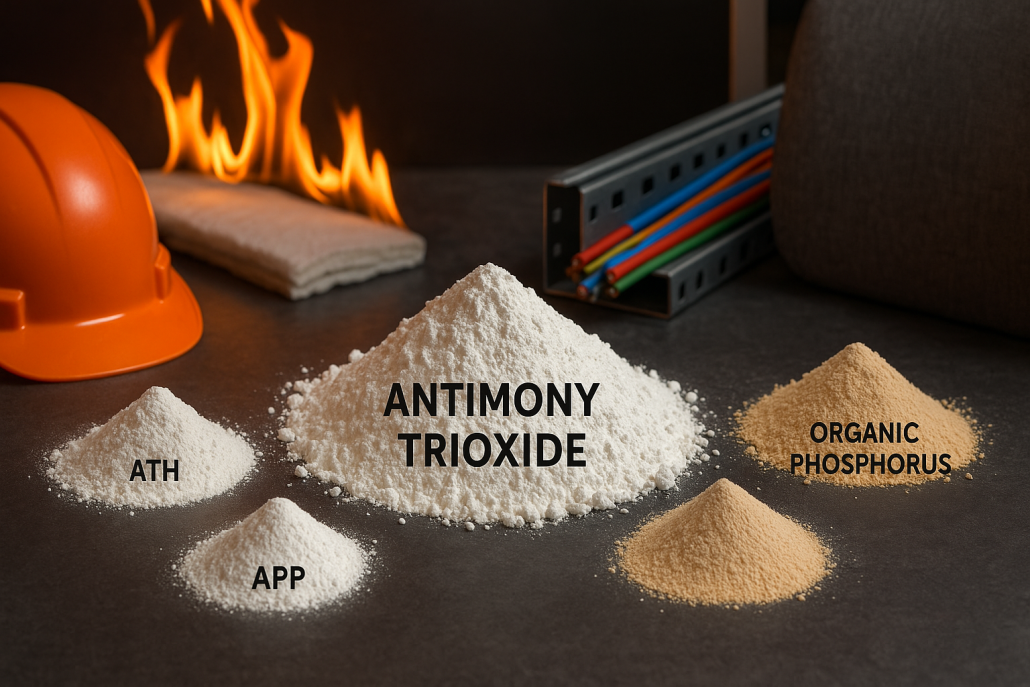
🔥 مقایسه تری اکسید آنتیموان با سایر مواد بازدارنده شعله
شیمیایی شیمیو عرضهکننده مستقیم انواع مواد بازدارنده شعله، از جمله تری اکسید آنتیموان در ایران
🧪 چکیده
تری اکسید آنتیموان (Sb₂O₃) یکی از پرکاربردترین بازدارندههای شعله در صنایع پلاستیک، نساجی، رنگ، سیم و کابل است. این ترکیب بهدلیل توانایی بالا در ایجاد پایداری حرارتی و ممانعت از گسترش شعله، بهویژه در ترکیب با هالوژنها استفاده میشود. در این مقاله، عملکرد، مزایا و معایب تریاکسید آنتیموان با سایر مواد بازدارنده شعله مانند هیدروکسید آلومینیوم، فسفرهای آلی، پلیفسفات آمونیوم و نانومواد مقایسه میشود.
۱. مقدمه
آتشسوزی یکی از مهمترین تهدیدها در ایمنی ساختمانها، وسایل نقلیه، لوازم الکترونیکی و نساجی است. برای مقابله با این خطر، استفاده از مواد بازدارنده شعله (Flame Retardants) در فرمولاسیون پلیمرها و پوششها امری ضروری شده است. یکی از رایجترین این ترکیبات، تریاکسید آنتیموان (Sb₂O₃) است که در ترکیب با هالوژنها بازدارندگی قوی ایجاد میکند.
با ظهور نگرانیهای زیستمحیطی و افزایش تقاضا برای مواد ایمنتر، مقایسه عملکرد Sb₂O₃ با جایگزینهایی مانند هیدروکسید آلومینیوم (ATH)، پلیفسفاتها و ترکیبات فسفردار اهمیت ویژهای یافته است.
۲. مقایسه تخصصی تری اکسید آنتیموان با سایر بازدارندههای شعله
بازدارندههای شعله از نظر مکانیسم عمل، سازگاری با پلیمرها، اثرات حرارتی، سمیت و تأثیر بر خواص مکانیکی محصول با یکدیگر تفاوت دارند. در این بخش، با نگاهی علمیتر به مقایسه تریاکسید آنتیموان (Sb₂O₃) با چهار گروه اصلی دیگر میپردازیم:
۲.۱. تری اکسید آنتیموان (Sb₂O₃)
-
عملکرد: بهتنهایی بازدارنده شعله نیست؛ بلکه با ترکیبات هالوژنه (مثل پلیوینیل کلراید) همافزایی میکند و تولید رادیکالهای غیر فعالکننده شعله میکند.
-
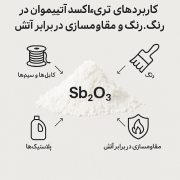
کاربردها: سیم و کابل، روکشهای PVC، منسوجات، چسبها، رزینهای حرارتی
-
نقطه قوت: عملکرد بسیار قوی در غلظت پایین (۲–۵٪) در کنار هالوژنها
-
چالشها: سمیت مزمن بالقوه؛ محدودیت در برخی استانداردهای اروپایی و مصرف خانگی
۲.۲. هیدروکسید آلومینیوم (ATH)
-
مکانیسم: تجزیه گرمایی ATH در دمای حدود ۲۰۰–۲۲۰ درجه سانتیگراد، منجر به آزادسازی آب میشود که شعله را خنک و رقیق میکند.
2Al(OH)3→Al2O3+3H2O\text{2Al(OH)}_3 \rightarrow \text{Al}_2\text{O}_3 + 3\text{H}_2\text{O}
-
کاربردها: سیم و کابلهای بدون هالوژن (Halogen-free), پلیاتیلنها، الاستومرها، کفپوشها
-
مزایا: زیستسازگار، بدون دود سمی، ارزان و در دسترس
-
معایب: نیاز به دوز بالا (۲۰–۶۰٪ وزنی) → افت خواص مکانیکی و افزایش چگالی پلیمر
۲.۳. پلیفسفات آمونیوم (APP)
-
مکانیسم: در دمای بالا تجزیه شده و فسفریک اسید آزاد میکند که با پلیمر کربنات تشکیل میدهد. این لایه کربنی جلوی نفوذ حرارت و اکسیژن را میگیرد.
-
کاربردها: پلیاورتان، رزین اپوکسی، پلیآمید، چوب، پوششهای نسوز
-
مزایا: بدون هالوژن، مناسب برای استانداردهای ایمنی اروپا، تولید دود کم
-
چالشها: حساسیت به رطوبت، قیمت نسبتاً بالا، نیاز به ترکیب با سایر مواد برای عملکرد کامل
۲.۴. فسفرهای آلی (Organic Phosphorus)
-
مکانیسم: تولید اسیدهای فسفره در فاز چگال و آزادسازی رادیکال در فاز گازی برای مهار شعله
-
کاربردها: پلیکربنات، اپوکسی، ABS، PVC، رنگهای مقاوم به شعله
-
ویژگی مثبت: عملکرد هم در فاز گاز و هم در فاز جامد
-
محدودیت: گرانتر از ترکیبات غیرآلی، احتمال ناپایداری در بعضی شرایط حرارتی
۲.۵. نانومواد (نانو رس، نانو گرافن، نانو فلزات)
-
مکانیسم: تشکیل ساختارهای لایهای یا شبکهای که بهعنوان سد فیزیکی در برابر گاز و حرارت عمل میکنند
-
کاربردها: پلیپروپیلن، پلیاستر، نایلون، کامپوزیتهای ساختمانی
-
ویژگی ممتاز: قابلیت تقویت خواص مکانیکی در کنار بازدارندگی شعله
-
چالشها: فرآوری پیچیده، هزینه بالا، نیاز به پراکنش یکنواخت در ماتریس پلیمری
۴. مزایا و معایب تریاکسید آنتیموان در مقایسه با جایگزینها
مزایا:
-
اثرگذاری بالا در دوز کم (۲–۱۰٪)
-
سازگاری با بسیاری از پلیمرها
-
مناسب برای تولیدات صنعتی با دمای بالا
-
تقویت عملکرد بازدارنده شعله هالوژنها
معایب:
-
دارای اثرات سمی بالقوه در تماس طولانیمدت
-
عدم تجزیهپذیری زیستی
-
ممنوعیت یا محدودیت در برخی کشورها (EU REACH)
۵. آینده بازدارندههای شعله بدون هالوژن
با تشدید مقررات زیستمحیطی، گرایش به سمت ترکیبات بدون هالوژن مانند APP، فسفرهای آلی و نانومواد افزایش یافته است. در حال حاضر، ترکیبات Sb₂O₃-free در حال توسعه هستند که سعی دارند عملکرد مشابه با کاهش اثرات سمی فراهم کنند.
✅ ۶. نتیجهگیری
تری اکسید آنتیموان همچنان یکی از مؤثرترین بازدارندههای شعله در صنایع پلاستیک و نساجی است، اما بهدلیل دغدغههای ایمنی و زیستمحیطی، جایگزینهای بدون هالوژن مانند ATH، APP و ترکیبات نانویی در حال کسب سهم بیشتری از بازار هستند. انتخاب مناسبترین بازدارنده، باید با در نظر گرفتن نوع پلیمر، شرایط عملیاتی، هزینه و استانداردهای ایمنی صورت گیرد.
منابع:
-
Flame Retardants: Chemistry and Applications
🔗 https://www.sciencedirect.com/science/article/pii/B9780128001591000132 -
Antimony Trioxide as a Flame Retardant Synergist – U.S. National Library of Medicine
🔗 https://pubchem.ncbi.nlm.nih.gov/compound/Antimony-trioxide -
Alternative Flame Retardants for Plastics and Textiles – Green Science Policy Institute
🔗 https://www.greensciencepolicy.org/resources/flame-retardants-alternatives/ -
Review on Flame Retardants: Classification, Recent Developments and Environmental Impact – MDPI
🔗 https://www.mdpi.com/2073-4360/12/11/2610 -
Recent Advances in Flame Retardant Materials and Strategies – Springer Nature
🔗 https://link.springer.com/article/10.1007/s10853-022-07279-2
🔥 Comparison of Antimony Trioxide with Other Flame Retardant Materials
Shimio Chemicals – Direct supplier of various flame retardants, including Antimony Trioxide, in Iran
🧪 Abstract
Antimony trioxide (Sb₂O₃) is one of the most widely used flame retardants in industries such as plastics, textiles, paints, wires, and cables. Due to its high ability to enhance thermal stability and inhibit flame spread—especially in combination with halogens—it plays a critical role in fire prevention. This article compares the performance, advantages, and limitations of Sb₂O₃ with other flame retardant materials like aluminum hydroxide, organic phosphorus compounds, ammonium polyphosphate, and nanomaterials.
1. Introduction
Fire is a major safety threat in buildings, vehicles, electronics, and textiles. To counter this risk, flame retardants have become essential in polymer and coating formulations. One of the most common compounds in this category is antimony trioxide (Sb₂O₃), which, when used with halogens, provides powerful flame inhibition.
With rising environmental concerns and demand for safer materials, the comparison of Sb₂O₃ with alternatives such as aluminum hydroxide (ATH), polyphosphates, and phosphorus-based compounds has gained importance.
2. Technical Comparison of Sb₂O₃ with Other Flame Retardants
Flame retardants differ in mechanism, compatibility with polymers, thermal stability, toxicity, and mechanical impact on the end product. Below is a more technical comparison of Sb₂O₃ and four major categories of flame retardants:
2.1. Antimony Trioxide (Sb₂O₃)
-
Mechanism: Not a flame retardant by itself; synergizes with halogenated compounds (like PVC) to produce radical scavengers that inhibit combustion.
-
Applications: Wires and cables, PVC coatings, textiles, adhesives, thermoset resins.
-
Strengths: Highly effective at low concentrations (2–5%) with halogens.
-
Challenges: Potential chronic toxicity; restricted in some EU and consumer safety standards.
2.2. Aluminum Hydroxide (ATH)
-
Mechanism: Decomposes at ~200–220°C, releasing water that cools and dilutes the flame.
2Al(OH)3→Al2O3+3H2O2Al(OH)_3 → Al_2O_3 + 3H_2O
-
Applications: Halogen-free cables, polyethylene, elastomers, floorings.
-
Advantages: Eco-friendly, non-toxic, affordable.
-
Drawbacks: Requires high loadings (20–60% by weight), which can degrade mechanical properties and increase polymer density.
2.3. Ammonium Polyphosphate (APP)
-
Mechanism: Decomposes at high temperatures to release phosphoric acid, promoting carbonaceous char formation as a protective layer.
-
Applications: Polyurethane, epoxy resins, polyamide, wood, fire-resistant coatings.
-
Advantages: Halogen-free, low smoke, meets EU safety standards.
-
Challenges: Moisture sensitivity, relatively expensive, often needs to be combined with other compounds for full effectiveness.
2.4. Organic Phosphorus Compounds
-
Mechanism: Releases phosphorus acids in the condensed phase and radicals in the gas phase to inhibit flame.
-
Applications: Polycarbonate, epoxy, ABS, PVC, flame-retardant paints.
-
Pros: Effective in both gas and solid phases.
-
Cons: Costlier than inorganic alternatives; may degrade under some thermal conditions.
2.5. Nanomaterials (Nano-clay, Graphene, Nano-metals)
-
Mechanism: Create layered or networked structures that act as physical barriers to heat and gas flow.
-
Applications: Polypropylene, polyester, nylon, building composites.
-
Pros: Simultaneous enhancement of flame resistance and mechanical strength.
-
Cons: Complex processing, higher cost, requires uniform dispersion.
3. Comparative Analysis of Sb₂O₃ with Other Flame Retardants
3.1. Technical Comparison
| Property | Sb₂O₃ | Phosphorus-based | Aluminum Hydroxide (ATH) | Nano Flame Retardants |
|---|---|---|---|---|
| Flame Inhibition Mechanism | Synergist with halogens | Acid release, char layer | Water release, flame cooling | Physical barrier, thermal insulation |
| Operating Temp. | High (600–800°C) | Medium (250–350°C) | Low (200–300°C) | Variable |
| Polymer Compatibility | PVC, ABS, PS, PP | Polyesters, epoxy, PU | Polyethylene, EVA | Wide range |
| Effective Dosage | 2–10% with halogens | 10–15% | 30–50% | 1–5% |
| Thermal Stability | High | Good | Medium | Very High |
| Environmental Safety | Moderate toxicity | Relatively safe | Safe | Depends on nanoparticle |
3.2. Key Performance Benefits of Sb₂O₃
-
Enhances flame retardant efficacy with halogens.
-
Excellent high-temperature stability.
-
Compatible with many thermoplastics.
3.3. Drawbacks and Motivation for Alternatives
| Weakness of Sb₂O₃ | Consequences |
|---|---|
| Toxic at high exposure | Environmental & human health concerns |
| Requires halogen synergy | Halogenated polymers may be harmful |
| Limited compatibility with new polymers | Not ideal for advanced engineering materials |
3.4. Future Alternatives in Flame Retardancy
Nano materials like nano-clay, nano borates, and graphene:
-
Offer similar or better effectiveness with lower dosage.
-
Are halogen-free and environmentally safer.
-
Improve mechanical and thermal properties.
4. Pros & Cons of Sb₂O₃ Compared to Alternatives
Advantages:
-
High efficiency at low concentration (2–10%)
-
Compatible with various polymers
-
Ideal for high-temp industrial applications
-
Enhances halogen performance
Disadvantages:
-
Potential toxicity with prolonged exposure
-
Not biodegradable
-
Restricted in some countries (e.g., EU REACH)
5. The Future of Halogen-Free Flame Retardants
With tightening environmental regulations, the industry is shifting toward halogen-free options such as ATH, APP, and nanomaterials. Sb₂O₃-free formulations are actively being developed to offer similar performance with reduced toxicity.
✅ 6. Conclusion
Antimony trioxide remains one of the most effective flame retardants in plastic and textile industries. However, due to safety and environmental concerns, halogen-free alternatives like ATH, APP, and nanomaterials are gaining market share. The ideal flame retardant should be selected based on polymer type, operational conditions, cost, and safety standards.





دیدگاه خود را ثبت کنید
تمایل دارید در گفتگوها شرکت کنید؟در گفتگو ها شرکت کنید.