
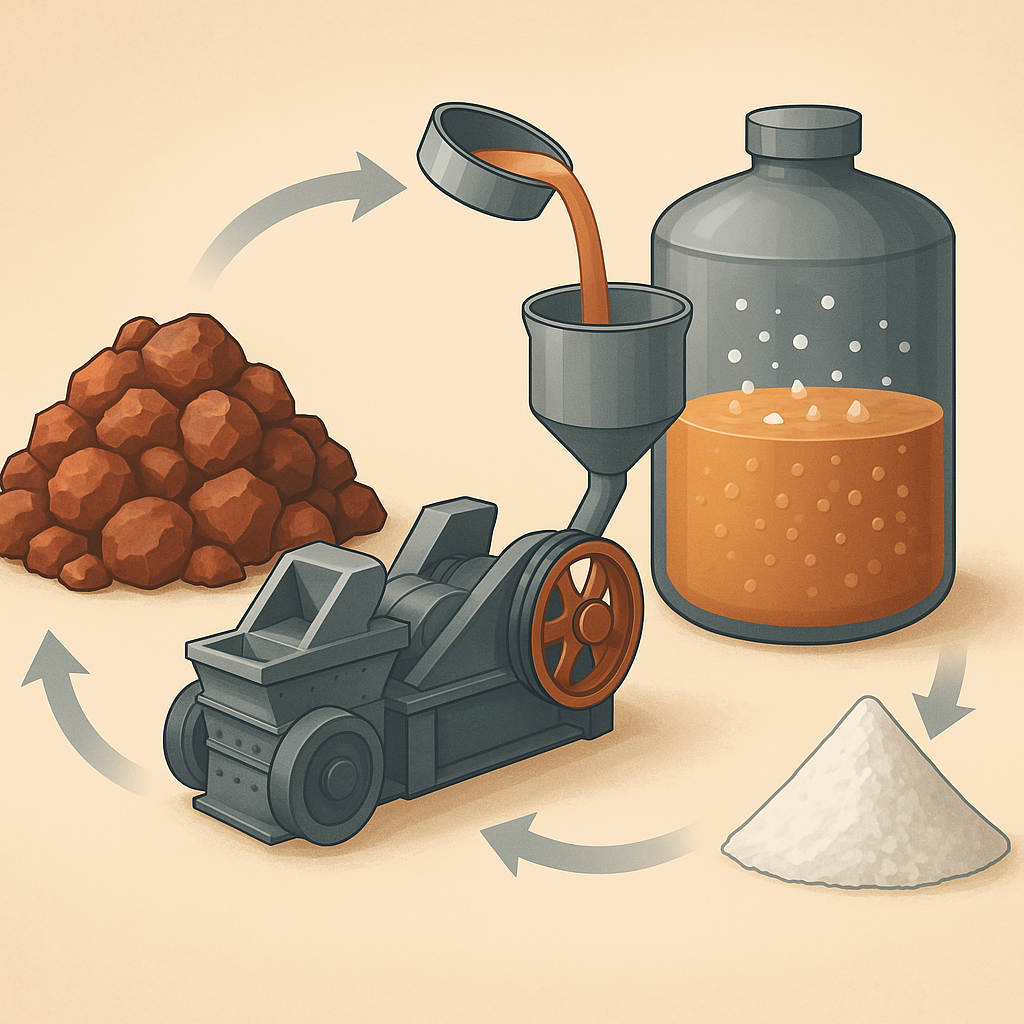
فرآیند استخراج اکسید آلومینیوم از بوکسیت و روش بایر
جهت استعلام قیمت اکسید آلومینیوم با ما تماس بگیرید. شیمیایی شیمیو
1. مقدمه
اکسید آلومینیوم (Al₂O₃) که به نام آلومینا نیز شناخته میشود، مادهای کلیدی در تولید آلومینیوم است. این ماده از سنگ معدن بوکسیت استخراج شده و از طریق فرآیند بایر تصفیه میشود. در این مقاله به فرآیند استخراج بوکسیت، روش بایر و کاربردهای آلومینا پرداخته خواهد شد.
2. استخراج بوکسیت
2.1. منابع و معادن بوکسیت
بوکسیت سنگ معدن اصلی آلومینیوم است که عمدتاً در مناطق گرمسیری یافت میشود. ذخایر بزرگ بوکسیت در کشورهای استرالیا، گینه، برزیل، چین و هند قرار دارند.
2.2. ترکیب شیمیایی بوکسیت
بوکسیت معمولاً حاوی:
- آلومینیوم هیدروکسیدها (مانند گیبسیت، بوهمیت و دیاسپور)
- سیلیس
- اکسیدهای آهن (هماتیت و گوتیت)
- مواد معدنی دیگر (مانند تیتانیوم و اکسیدهای دیگر)
2.3. مراحل استخراج بوکسیت
استخراج بوکسیت شامل مراحل زیر است:
- شناسایی و ارزیابی معدن – بررسی اقتصادی و زیستمحیطی منطقه.
- حفاری و انفجار – برداشت لایههای رویی زمین برای دسترسی به بوکسیت.
- حملونقل و ذخیرهسازی – انتقال بوکسیت استخراجشده به کارخانههای فرآوری.
- تصفیه اولیه – جداسازی ناخالصیهای درشت قبل از ورود به فرآیند بایر.
| کشور | میزان تولید سالانه بوکسیت (میلیون تن) | درصد ذخایر جهانی |
|---|---|---|
| استرالیا | 110 | 28% |
| گینه | 82 | 24% |
| برزیل | 37 | 9% |
| چین | 68 | 22% |
| هند | 26 | 7% |
3. فرآیند بایر برای تولید اکسید آلومینیوم
فرآیند بایر متداولترین روش استخراج آلومینا از بوکسیت است که در سال 1887 توسط کارل یوزف بایر توسعه یافت.
3.1. مراحل فرآیند بایر
- خردایش و آسیاب کردن – بوکسیت خرد شده و آسیاب میشود تا سطح تماس آن افزایش یابد.
- انحلال در سود سوزآور (NaOH) – بوکسیت در محلول سود سوزآور در دمای بالا حل میشود تا آلومینیوم هیدروکسیدها حل شوند.
- جداسازی ناخالصیها – مواد نامحلول مانند اکسید آهن و سیلیس تهنشین شده و از محلول جدا میشوند.
- رسوبدهی آلومینیوم هیدروکسید – با کاهش دما و تغییر شرایط شیمیایی، آلومینیوم هیدروکسید (Al(OH)₃) رسوب میکند.
- کلسیناسیون (پخت در دمای بالا) – آلومینیوم هیدروکسید در دمای حدود 1000-1200 درجه سانتیگراد گرم میشود تا به آلومینا (Al₂O₃) تبدیل شود.
3.2. معادلات شیمیایی فرآیند بایر
واکنش انحلال: رسوبدهی: کلسیناسیون:
3.3. مزایا و معایب فرآیند بایر
| مزایا | معایب |
| بازیافت سود سوزآور | مصرف بالای انرژی |
| تولید آلومینای با خلوص بالا | تولید لجن قرمز بهعنوان ضایعات سمی |
| استفاده صنعتی گسترده | نیاز به دمای بالا در کلسیناسیون |
4. نتیجهگیری
فرآیند استخراج بوکسیت و روش بایر نقش کلیدی در تولید آلومینا دارند. با پیشرفت فناوری، بهبود در بازیافت مواد و کاهش اثرات زیستمحیطی فرآیند بایر از مهمترین چالشهای صنعت آلومینیوم محسوب میشود. پژوهشها در زمینه کاهش مصرف انرژی و مدیریت بهتر لجن قرمز میتواند به پایداری بیشتر این صنعت کمک کند.
منابع پیشنهادی:
-
کتابها:
-
R.J. Lancashire, “The Chemistry of Aluminium, Gallium, Indium, and Thallium”, Oxford University Press, 1996.
-
K.J. Mackenzie & M.E. Smith, “Multinuclear Solid-State NMR of Inorganic Materials”, Elsevier, 2002.
-
-
مقالات علمی:
-
Habashi, F., “Bayer Process and Alumina Production”, Journal of Metals, 1987.
-
-
استانداردها و گزارشهای صنعتی:
-
International Aluminium Institute, “Alumina Production and Bauxite Mining Report”, 2020.
-
ASTM B211-21: “Standard Specification for Aluminum and Aluminum-Alloy”, ASTM International, 2021.
-
-
وبسایتهای معتبر:
-
Aluminium.org – انجمن بینالمللی آلومینیوم
-
USGS.gov – سازمان زمینشناسی ایالات متحده
-
ScienceDirect.com – پایگاه مقالات علمی معتبر درباره فرآیند بایر
-
Production and Extraction of Aluminum Oxide – Bauxite Extraction Process and Bayer Method
1. Introduction
Aluminum oxide (Al₂O₃), also known as alumina, is a key material in aluminum production. It is extracted from bauxite and refined through the Bayer process. This article will discuss the process of extracting bauxite, the Bayer method, and the applications of alumina.
2. Bauxite Extraction
2.1. Sources and Bauxite Deposits
Bauxite, the primary ore of aluminum, is mostly found in tropical regions. Large bauxite deposits are located in countries like Australia, Guinea, Brazil, China, and India.
2.2. Chemical Composition of Bauxite
Bauxite typically contains:
-
Aluminum hydroxides (such as gibbsite, boehmite, and diaspore)
-
Silica
-
Iron oxides (hematite and goethite)
-
Other minerals (such as titanium and other oxides)
2.3. Bauxite Extraction Stages
The bauxite extraction process involves the following stages:
-
Surveying and Mine Evaluation – Economic and environmental assessments of the region.
-
Drilling and Blasting – Surface layers are removed to access bauxite.
-
Transportation and Storage – Extracted bauxite is transported to processing plants.
-
Primary Processing – Removal of coarse impurities before entering the Bayer process.
| Country | Annual Bauxite Production (Million tons) | Global Reserves Percentage |
|---|---|---|
| Australia | 110 | 28% |
| Guinea | 82 | 24% |
| Brazil | 37 | 9% |
| China | 68 | 22% |
| India | 26 | 7% |
3. Bayer Process for Aluminum Oxide Production
The Bayer process is the most common method for extracting alumina from bauxite, developed by Carl Josef Bayer in 1887.
3.1. Bayer Process Stages
-
Crushing and Grinding – Bauxite is crushed and ground to increase its surface area.
-
Dissolution in Sodium Hydroxide (NaOH) – Bauxite is dissolved in sodium hydroxide at high temperatures, and aluminum hydroxides are dissolved into the solution.
-
Impurity Separation – Insoluble materials like iron oxide and silica are removed as red mud.
-
Precipitation of Aluminum Hydroxide – The solution is cooled, and aluminum hydroxide (Al(OH)₃) precipitates.
-
Calcination – The aluminum hydroxide is heated to 1000–1200°C to convert it into alumina (Al₂O₃).
3.2. Chemical Equations of the Bayer Process
Dissolution Reaction: Al(OH)3+NaOH→Na[Al(OH)4]Al(OH)_3 + NaOH \rightarrow Na[Al(OH)_4]
Precipitation Reaction: Na[Al(OH)4]→Al(OH)3↓+NaOHNa[Al(OH)_4] \rightarrow Al(OH)_3 \downarrow + NaOH
Calcination Reaction: 2Al(OH)3→Al2O3+3H2O↑2Al(OH)_3 \rightarrow Al_2O_3 + 3H_2O \uparrow
3.3. Advantages and Disadvantages of the Bayer Process
| Advantages | Disadvantages |
|---|---|
| High recovery of alumina from bauxite | High energy consumption |
| Recycling of sodium hydroxide | Production of red mud, an environmentally hazardous waste |
| Industrially efficient for aluminum-rich resources | Requires high temperatures for calcination |
4. Conclusion
The bauxite extraction and Bayer process play a vital role in alumina production. With advancements in technology, improving material recycling and reducing the environmental impact of the Bayer process are significant challenges for the aluminum industry. Ongoing research into energy optimization and better management of red mud is crucial for the sustainability of this industry.





دیدگاه خود را ثبت کنید
تمایل دارید در گفتگوها شرکت کنید؟در گفتگو ها شرکت کنید.